
Retiring the Board Pack
Physical board papers, once the backbone of corporate governance, are now a relic of the past. At one time, board members would arrive at meetings to find a printed “board pack” awaiting them, often as thick as an old phone book. These massive collections of documents were essential reading and a hallmark of traditional boardroom culture.
A Legacy of Paper and Photocopiers
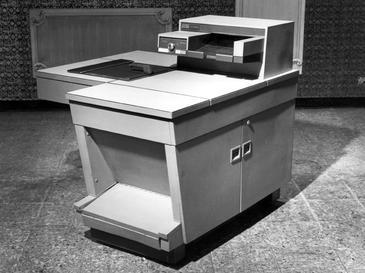
The modern board pack traces back further than most people realize. The Xerox 914, introduced in 1959, was the first plain-paper photocopier and made it cheap and fast to mass-produce thick paper binders for every director on a board. It's often credited as one of the most commercially successful products of the 20th century, precisely because it turned document duplication from a specialist task into something any office could do in seconds.
Enter the PDF Era
Decades later, Adobe co-founder John Warnock proposed a project code-named "Camelot" in 1991: a simplified, platform-independent version of Adobe's PostScript format. That project became the Portable Document Format (PDF), launched publicly in 1993. Adobe kept PDF proprietary until 2008, when it became an open ISO standard (ISO 32000-1). Government agencies were among the format's earliest large-scale adopters for public forms, which helped cement PDF as the default "official document" format — including for board materials once companies started emailing packs instead of printing them.
Going digital was greener and more convenient. It didn't, however, make the contents any more secure — and in some ways, it made them easier to lose track of than paper ever was.
Why PDF Board Packs Are a Security Risk
Once a board pack is exported to PDF and emailed, it leaves the organization's internal systems entirely: no access logs, no revocation, no audit trail. From there, a few common failure points show up again and again:
-
A director downloads the file to a shared home computer.
-
The pack gets forwarded to someone outside the board.
-
A printed copy is left unattended in a public place.
-
A laptop or phone containing the file is lost or stolen.
-
The file is emailed to the wrong recipient entirely — the single most common "miscellaneous error" pattern in Verizon's breach data, year after year.
"Password protection" doesn't close this gap as much as it appears to. Security researchers at Locklizard, who track PDF encryption history, note that even PDF owner passwords — the ones meant to restrict printing or copying — can be stripped out almost instantly by widely available recovery tools, regardless of how strong the password is. Open passwords fare only slightly better: weak ones can be cracked in seconds, and even strong ones are vulnerable to brute-force attacks given enough computing time. In practice, passwords are also just as often abandoned altogether once a director forgets one and asks IT to resend the file unprotected.
For material covering financials, M&A discussions, executive changes, or litigation strategy, that's a meaningful exposure. Boardroom leaks involving forwarded or intercepted email attachments have made headlines before — and it's exactly the scenario board portals are built to prevent.
What a Board Portal Does Differently
A board portal keeps materials inside a controlled environment instead of exporting them into email. Directors authenticate to view documents rather than receiving them as attachments, which means access can be tracked, limited, and revoked at any time — even after distribution.
Common security features across established board portal providers include:
-
Multi-factor authentication (MFA) and single sign-on (SSO) — see the glossary below for what these mean in practice.
-
Granular, role-based permissions, so a committee member sees only what they're cleared for.
-
Full audit logs of who accessed what, and when.
-
Encryption in transit and at rest, often backed by independent certifications such as SOC 2, ISO 27001, or GDPR-compliant hosting.
Exactly which certifications and features apply depends on the specific provider — this list describes common practice across the category, not a universal guarantee, so it's worth verifying against whichever platform you're evaluating rather than assuming.
Core Capabilities to Look For
Beyond security, the strongest board portals actively replace the static PDF workflow rather than just hosting a copy of it. When evaluating a platform, look for capabilities across the full meeting lifecycle:
Before the meeting
-
Collaborative agenda building with revision and approval workflows.
-
Agenda-specific comments and annotations, rather than a single flat PDF.
-
Tracked distribution, so the corporate secretary knows who has and hasn't reviewed materials.
During the meeting
-
Equal support for in-person, hybrid, and fully remote formats.
-
Real-time updates to materials that don't require re-downloading a new file version.
-
Integrated voting and resolution tools.
Ongoing access and oversight
-
The same MFA, role-based permissions, and audit-log features listed above, applied continuously — not just at the moment of distribution.
-
The ability to revoke access instantly if a director leaves the board or a device is compromised.
Together, these features keep directors engaged and informed without sacrificing the security a paper or PDF process can't guarantee.
The Business Case: What the Data Shows
Governance teams aren't switching platforms on a hunch. Multiple industry analysts track the board portal market, and while their headline figures vary considerably — estimates for 2025–2026 alone range from roughly $1.2 billion to over $10 billion, reflecting very different methodologies for what counts as "board portal" software — the direction is consistent across every report: double-digit annual growth, driven by rising regulatory scrutiny, cybersecurity concerns, and demand for remote-capable governance tools. That inconsistency in the exact dollar figure is itself a useful reminder to treat market-size claims from any single research firm with some caution, and to focus on the underlying drivers — compliance pressure, cyber risk, and remote work — which show up consistently regardless of which report you read.
On the risk side, the numbers are more consistent. IBM's 2025 report found human error was responsible for 26% of the breaches it studied, alongside 51% caused by malicious attacks and 23% by IT failures. Healthcare, another sector with strict confidentiality obligations similar to board governance, saw the highest average breach cost of any industry studied, at $7.42 million — a useful proxy for what's at stake when regulated, sensitive documents move outside a controlled system.
Is It Time to Ditch the Board Pack?
The paper binder disappeared because it was inconvenient. The PDF is disappearing because it's insecure. If your board materials still leave your organization as an email attachment, the question isn't whether that's a risk — it's how long you're willing to carry it.
Key Takeaways
-
A board pack is the set of materials directors receive before a meeting; it moved from printed binders to PDF attachments, but the underlying security gap — no access control once the file leaves the organization — never went away.
-
PDF passwords offer weaker protection than most people assume; owner and even open passwords can often be removed with freely available tools.
-
Human error, including simply emailing a file to the wrong person, is a leading contributor to real-world data breaches, according to both IBM and Verizon's annual reports.
-
Board portals replace static PDF distribution with an authenticated, permissioned, and logged environment, so access can be tracked and revoked even after materials go out.
-
Look for MFA/SSO, role-based permissions, audit logs, and recognized encryption/compliance certifications — but confirm which specific features and certifications apply to the vendor you're actually evaluating.
Glossary of Technical Terms
-
Board portal: A secure, cloud- or app-based platform used to build, distribute, and discuss board meeting materials in place of paper or emailed PDFs.
-
Multi-factor authentication (MFA): A login method that requires more than one form of verification (for example, a password plus a one-time code sent to a phone) before granting access.
-
Single sign-on (SSO): A system that lets a user log in once with one set of credentials to access multiple approved applications, rather than maintaining separate passwords for each.
-
Role-based permissions: Access rules that determine what a specific user can see or do based on their assigned role (for example, "audit committee member") rather than granting blanket access to everyone.
-
Audit log: A time-stamped record of who accessed, viewed, edited, or downloaded a document, used to reconstruct exactly what happened after the fact.
-
Encryption in transit / at rest: Encoding data so it's unreadable without the correct key, both while it's moving across a network ("in transit") and while it's stored on a server ("at rest").
-
SOC 2 / ISO 27001: Independent audit frameworks that assess whether a company's data-security controls meet recognized standards; a report or certification under either indicates a third party has reviewed those controls.
-
GDPR-compliant hosting: Data storage arrangements structured to meet the European Union's General Data Protection Regulation requirements around how personal data is stored, processed, and protected.
Sources
-
IBM, Cost of a Data Breach Report 2025
-
Verizon, 2025 Data Breach Investigations Report
-
Locklizard, "A History of PDF Password Protection" and related PDF security research
-
Wikipedia, "History of PDF" and "John Warnock" (for PDF/Adobe development timeline)
-
Multiple board portal market research reports (IndustryARC, MarketsandMarkets-style syndicated reports, Research and Markets, Allied Market Research, Market Research Future, Research Nester) — cited here to illustrate the range of market-size estimates, not as a single authoritative figure
[Updated: 2 July 2026]

About the author
BoardCloud USA Editor
United States BoardCloud Editor.